

How to Stop Weeds Growing Between Paving Stones
Weeds growing between paving stones usually take root in accumulated soil, organic debris, or loose jointing material. Removing the visible plants helps, but long-term control also requires cleaning the joints and keeping them filled with a suitable material where the paving system allows it.
The right method depends on whether the surface is a dry-laid patio, a sand-set walkway, or paving installed with mortar.
1. Identify the Type of Paving
Before removing weeds, determine how the stones are installed.
- Sand-set or dry-laid pavers: The joints may contain jointing sand or another granular material.
- Mortared paving: The joints are filled with a cement-based material.
- Irregular stone paths: The gaps may contain soil, gravel, or planted ground cover.
Do not dig aggressively into the joints before identifying the construction. Removing too much material can loosen pavers, undermine the surface, or damage mortar.
2. Remove Existing Weeds
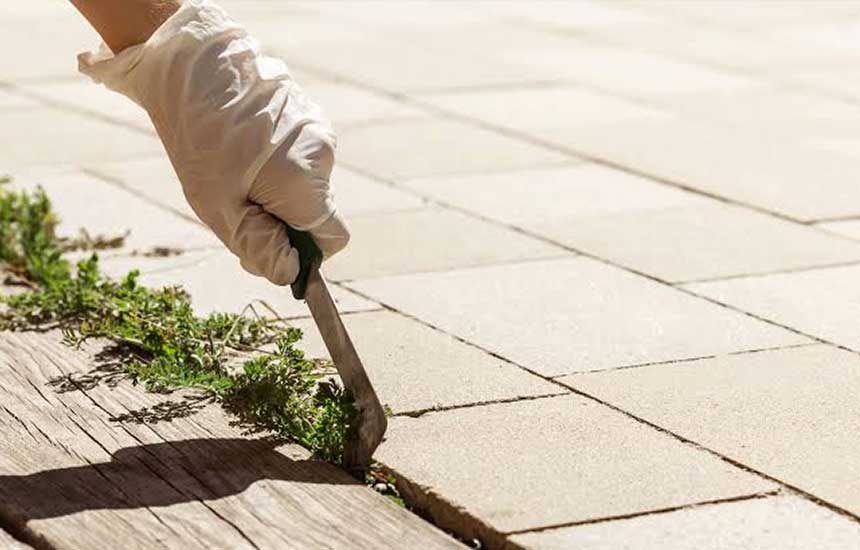
For small weeds, manual removal is often a good starting point.
- Wear gardening gloves and appropriate footwear.
- Use a narrow weeding tool or joint scraper to loosen the plant.
- Remove as much of the root system as practical.
- Collect the plant debris rather than leaving it in the joint.
- Check nearby joints for seedlings.
Removing weeds when the soil is slightly moist can make it easier to extract roots. Avoid working on a slippery surface or using sharp tools in a way that could damage the paving.
For extensive growth, first determine whether the plants are rooted in the joints or are emerging from beneath the paving.
3. Clean Soil and Organic Debris From the Joints
Leaves, moss, fine soil, and decomposing plant material can accumulate between stones and create a place where weed seeds establish.
Use a stiff brush or a suitable joint-cleaning tool to remove loose debris.
Avoid excessive pressure washing. Strong water jets can remove jointing sand, damage mortar, or wash out the supporting material beneath pavers. If pressure washing is appropriate for the surface, follow the paving manufacturer’s recommendations and use a suitable pressure and nozzle distance.
4. Refill the Joints With Suitable Material
For dry-laid pavers, restoring the correct joint material can help stabilize the stones and reduce spaces where weeds establish.
Depending on the paving system, this may involve:
- Replacing compatible jointing sand
- Using a suitable polymeric jointing sand
- Replenishing gravel in a gravel-based path
Follow the product instructions for joint width, surface preparation, application, and activation. Some polymeric products require careful removal of residue from the stone surface and specific weather conditions during installation.
Do not use ordinary jointing sand in a mortared joint or apply a rigid product where the paving system requires flexibility.
5. Improve Drainage and Surface Maintenance
Persistent dampness, shade, and organic debris can encourage moss and some weed growth.
To reduce these conditions:
- Sweep the surface regularly.
- Remove leaves and decomposing plant matter.
- Address drainage problems that cause repeated pooling.
- Trim nearby vegetation if it excessively shades the path.
- Check for loose or sunken pavers that collect soil and water.
Some weeds can grow in very small amounts of soil, so maintenance reduces the opportunity for growth but cannot guarantee a permanently weed-free surface.
6. Should You Use Boiling Water, Salt, or Herbicides?
Be cautious with improvised weed treatments.
Boiling water can damage nearby plants and may cause burns. It may kill exposed growth but often does not prevent regrowth from roots or seeds.
Salt can damage surrounding soil, nearby plants, and paving materials. It may persist in the environment and is generally a poor choice for routine weed control.
Herbicides vary in their approved uses, risks, and effectiveness. If you choose a chemical treatment, use a product labeled for the specific site and follow all label directions, including precautions for nearby plants, pets, people, and drainage areas.
Avoid mixing household chemicals or applying products in ways that are not permitted by their labels.
7. Prevent Weeds From Returning
No method can prevent every seed from reaching a paving joint. However, you can reduce recurrence by:
- Removing weeds before they set seed.
- Sweeping away soil and plant debris.
- Maintaining the appropriate jointing material.
- Repairing damaged or excessively wide joints.
- Correcting drainage issues.
- Inspecting the path regularly during the growing season.
If roots repeatedly emerge from beneath the paving, the problem may require lifting and resetting the affected stones rather than repeatedly removing surface growth.
Common Mistakes to Avoid
- Removing so much jointing sand that pavers become unstable.
- Using a pressure washer too aggressively.
- Applying salt where it can damage soil or plants.
- Assuming visible weed removal eliminates the root system.
- Filling joints with a material incompatible with the paving design.
- Ignoring water pooling or sunken stones.
Frequently Asked Questions
Why do weeds keep growing between paving stones?
Wind-blown seeds can settle in small amounts of soil and debris. Weeds may also regrow from roots beneath the paving. Cleaning the joints and restoring suitable jointing material can reduce recurrence.
Does polymeric sand stop all weeds?
No. Properly installed polymeric jointing sand can reduce weed establishment in suitable paving systems, but it is not a guarantee against all weeds. Seeds can germinate in surface debris or other nearby material.
Can I use vinegar to kill weeds between pavers?
Household vinegar may damage exposed plant tissue but may not kill established roots. Stronger vinegar products can cause serious skin and eye injuries. Check local regulations and product instructions before using any chemical weed treatment.
Should I pressure-wash a paved patio?
Only when the paving material and joint system can tolerate it. Excessive pressure can remove jointing material and damage the surface. Follow the paving manufacturer’s recommendations.
Final Advice
Remove weeds carefully, clean out loose debris, and restore compatible jointing material where needed. Regular sweeping and good drainage can make maintenance easier, while severe or recurring growth may require a closer look at the paving construction.