

How to Check Engine Oil Level Correctly
Checking your engine oil helps you identify a low oil level before it causes serious engine problems. Many vehicles use a physical dipstick, while others have an electronic oil-level display.
The correct checking procedure depends on the vehicle. Always consult the owner’s manual for the required engine temperature, parking conditions, and waiting time.
1. Park on Level Ground
Park the vehicle on a flat, stable surface and apply the parking brake.
Depending on the vehicle, the engine may need to be switched off and allowed to rest for a specified period. Some vehicles require a warm engine; others use a different procedure.
Do not assume that every car should be checked under identical conditions.
2. Locate the Oil Dipstick
If your vehicle has a dipstick:
- Open the hood and secure it properly.
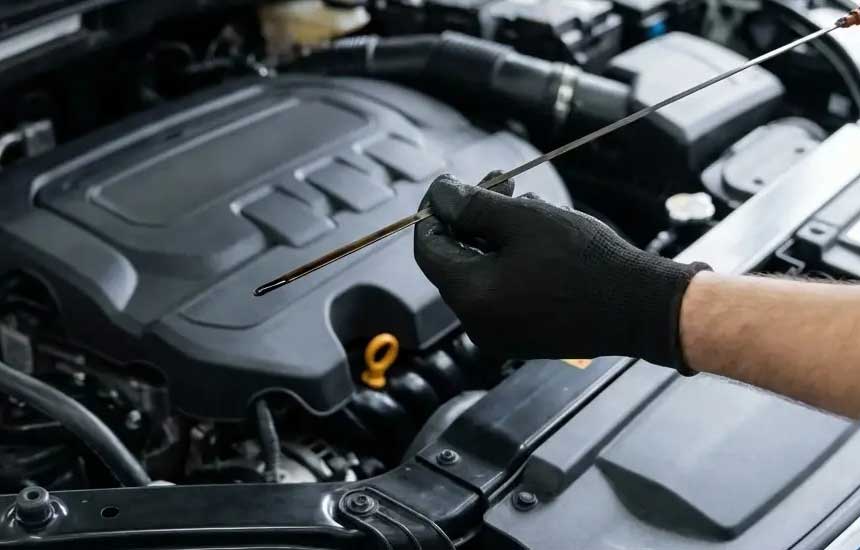
- Identify the engine oil dipstick using the owner’s manual.
- Pull it out carefully.
- Wipe it clean with a lint-free cloth or paper towel.
Do not confuse the engine oil dipstick with other fluid indicators.
3. Read the Oil Level
Reinsert the dipstick fully, then remove it again and inspect the oil level.
Most dipsticks have two marks, holes, or a crosshatched area indicating the acceptable range. The exact markings vary by manufacturer.
- Between the minimum and maximum marks: The level is generally within the specified range.
- Near or below the minimum mark: Follow the owner’s manual for the appropriate corrective action.
- Above the maximum mark: Do not add more oil. An overfilled engine may require professional attention.
If the oil is smeared along the dipstick, wipe it and repeat the measurement to obtain a clearer reading.
4. Add the Correct Oil if Necessary
If the level is low, identify the exact oil specification and viscosity required for your engine.
Do not select oil based only on a generic viscosity recommendation. Modern engines may require manufacturer-specific approvals.
Add a small amount at a time through the correct filler opening. Wait as directed by the manual, then recheck the level.
Avoid overfilling. If the level was significantly below minimum, determine why before assuming that topping it up solves the problem.
5. Check for Warning Signs
Pay attention to:
- Oil level that repeatedly drops
- Visible oil leaks beneath the engine
- A burning-oil smell
- Blue exhaust smoke
- Oil that appears contaminated
- An oil-pressure warning light
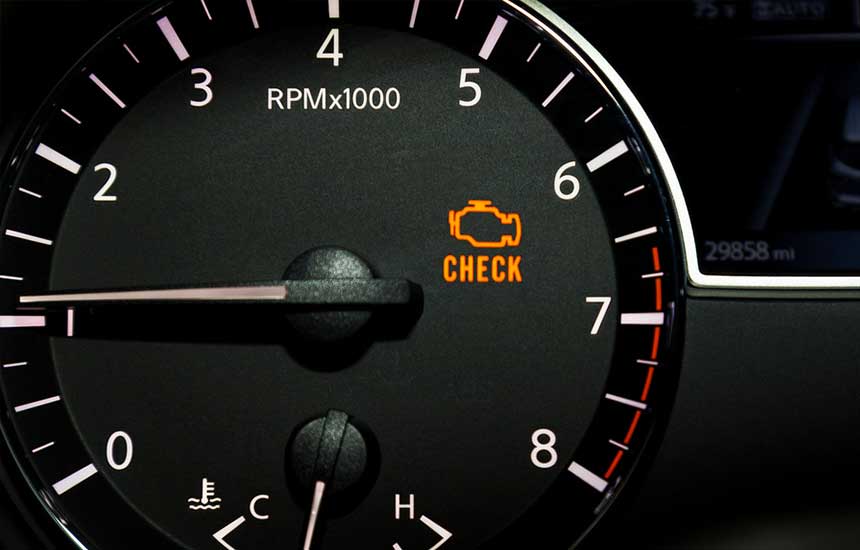
Oil level and oil pressure are different issues. If the oil-pressure warning light appears while the engine is running, stop safely and follow the manufacturer’s instructions. Do not continue driving simply because the dipstick shows enough oil.
If the oil appears milky, foamy, or unusually contaminated, seek diagnosis rather than assuming a normal oil change will resolve the problem.
6. Vehicles With Electronic Oil-Level Monitoring
Some vehicles do not have a traditional dipstick. They measure oil electronically and display the result through the instrument panel or infotainment system.
Follow the manufacturer’s procedure carefully. The system may require a particular engine temperature, a level surface, or a waiting period before it will provide a reading.
An unavailable electronic reading does not automatically mean the oil level is low.
Common Mistakes to Avoid
- Checking on a steep slope.
- Using the wrong dipstick.
- Adding oil without checking the required specification.
- Filling above the maximum mark.
- Confusing an oil-level warning with an oil-pressure warning.
- Ignoring repeated oil loss.
Frequently Asked Questions
How often should I check engine oil?
Follow the owner’s manual. Checking periodically between scheduled services is useful, especially before long journeys or if the vehicle has a history of oil consumption.
Should the engine be hot or cold when checking oil?
It depends on the vehicle. Some manufacturers specify checking after the engine has warmed up and been switched off for a set period; others specify different conditions.
What happens if the engine has too much oil?
Overfilling can cause problems, including aeration or oil entering parts of the engine where it should not. Correct the level according to the manufacturer’s procedure.
Can I drive with low engine oil?
Do not ignore a low oil reading. If the oil-pressure warning appears, stop safely and follow the vehicle manual. A significantly low level or visible leak warrants prompt attention.
Final Advice
Use the procedure specified for your vehicle, read the level carefully, and add only oil that meets the required specification. Repeated oil loss, an overfilled engine, or an oil-pressure warning needs more than a routine top-up.