

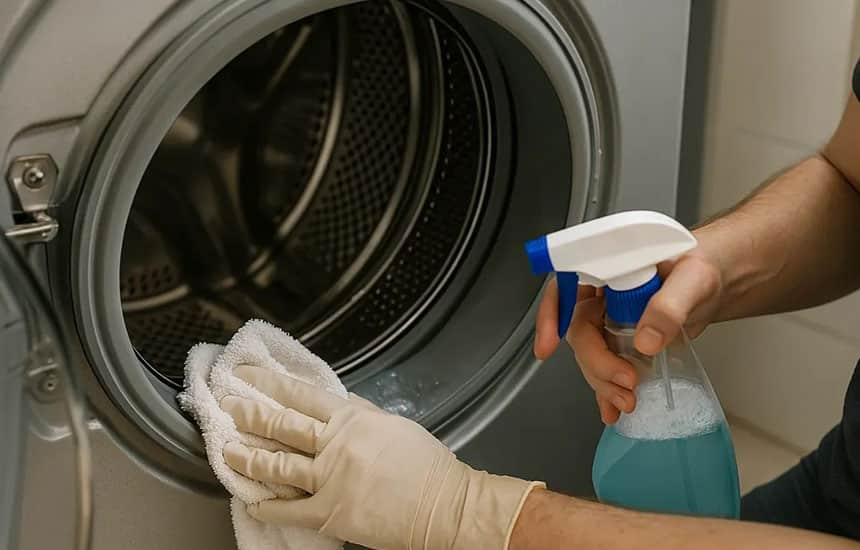
The Rubber Seal Is Easy to Overlook
On a front-loading washing machine, the rubber door seal sits between the drum opening and the door. Its folds can trap water, lint, hair, detergent residue, and small objects.
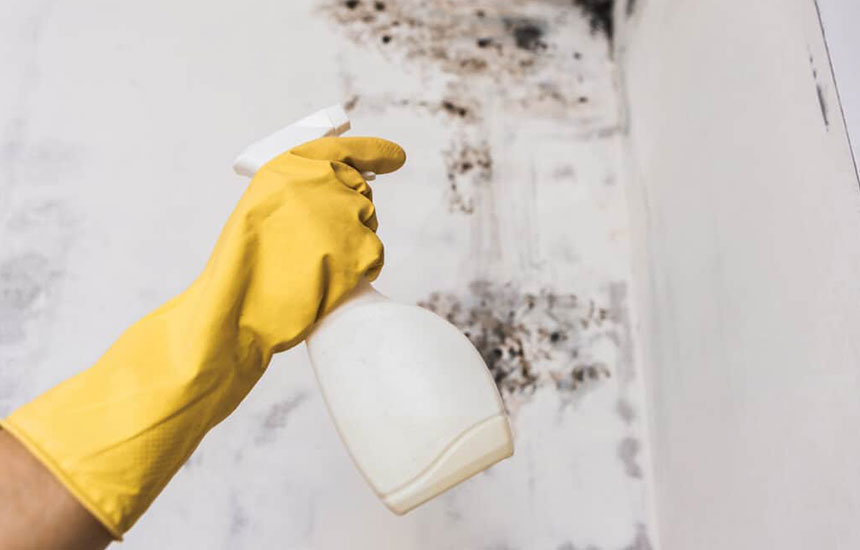
Because the seal stays damp after a wash, residue can build up over time. Dark marks or an unpleasant smell may develop if the area is not cleaned and dried regularly.
The goal is not to scrub the rubber as aggressively as possible. It is to remove trapped debris, clean the surface with a suitable product, and let the seal dry.
What to Prepare
You will need:
- A soft cloth or microfiber towel
- A small soft brush
- Gloves if recommended by the cleaning product label
- A washing-machine cleaner or mild cleaning solution approved by the manufacturer
Check the washer manual before using a cleaning chemical. Some rubber materials and finishes can be damaged by unsuitable products.
Never mix bleach with vinegar, ammonia, or other cleaning products. Mixing chemicals can release hazardous gases.
Step 1: Turn Off the Washer and Open the Door
Switch off the machine and make sure the drum is empty.
Pull back the flexible rubber folds gently. Do not stretch the seal farther than it naturally moves.
Use a flashlight if necessary. Small items such as coins, hair clips, lint, or tissue can become trapped inside the folds.
Step 2: Remove Loose Debris First
Take out visible hair, lint, and small objects by hand or with a soft cloth.
This step should come before applying any cleaning liquid. If debris is left in place, it can spread across the seal while you wipe.
Check the lower part of the gasket carefully because water and residue often collect there.
Step 3: Clean the Rubber Surface
Apply a manufacturer-approved cleaning solution to a cloth rather than pouring a large amount directly into the seal.
Wipe the visible surface and gently clean inside the folds. Use a soft brush for stubborn residue, applying light pressure.
Avoid:
- Wire brushes
- Abrasive scouring pads
- Sharp tools
- Strong solvents not approved for the washer
- Excessive pulling on the rubber
If a stain remains, follow the cleaner’s label instructions rather than increasing the chemical concentration.
Step 4: Wipe Away Cleaner Residue
Use a clean damp cloth to remove remaining cleaning solution. Then dry the seal with a separate towel.
Leaving cleaner residue behind can irritate skin or affect future laundry, depending on the product used.
Pay attention to the lower fold and the area where water tends to collect.
Step 5: Run a Cleaning Cycle if Needed
If the machine itself has an unpleasant odor, cleaning the door seal alone may not solve the problem.
Follow the washer manufacturer’s instructions for a drum-cleaning cycle. Some machines require a specific cleaning program or approved washer-cleaning product.
Do not add household chemicals together or use a cleaning method that conflicts with the machine’s manual.
How to Keep the Seal Cleaner Between Washes
A few small habits can reduce future buildup:
- Remove wet laundry soon after the cycle finishes.
- Wipe away visible water from the lower seal.
- Leave the door open slightly when the machine is not in use, if the location is safe and the manufacturer permits it.
- Keep detergent use within the recommended amount.
- Check pockets before washing to reduce trapped debris.
- Clean the detergent drawer and other areas according to the manual.
If you have young children or pets, make sure an open washer door cannot create a safety hazard.
When Cleaning Is No Longer Enough
Cleaning can remove surface dirt and residue, but it cannot repair damaged rubber.
If the seal is torn, badly deformed, leaking, or has persistent staining that does not respond to appropriate cleaning, contact the manufacturer or a qualified appliance technician.
Do not apply silicone sealant or household glue to a damaged washer gasket as a substitute for the correct replacement part.
Frequently Asked Questions
Why does my washing machine door seal have black spots?
Black spots may be surface mildew, residue, or staining. Clean the area using a method approved by the washer manufacturer. If the rubber is deteriorating, cleaning will not restore it.
Can I use bleach on a washing machine rubber seal?
Only if the manufacturer and the product label explicitly allow it. Some cleaners can damage rubber or nearby components. Never mix bleach with vinegar, ammonia, or other cleaners.
How often should I clean the door seal?
There is no universal schedule because use, humidity, detergent amount, and washer design differ. Check the seal regularly and clean it when residue or moisture buildup appears.
Should I leave the washer door open after washing?
Leaving it slightly open can help the interior dry, provided it is safe in your household and permitted by the manufacturer. Keep the area inaccessible to children and pets if the open door creates a risk.
Final Advice
A washing machine door seal usually needs careful, regular attention rather than aggressive scrubbing. Remove trapped debris, use a suitable cleaner, wipe away residue, and dry the folds. If the rubber is torn or leaking, arrange the correct repair instead of trying to cover the damage.