

Introduction
Choosing the right wall anchor is essential when you need to hang shelves, mirrors, cabinets, curtain hardware, or other household items. The correct fixing depends on two main factors: the material of the wall and the weight and type of load.
A fixing that works well in solid concrete may fail in hollow drywall. Similarly, a lightweight plastic plug is not a suitable choice for every heavy object.
This guide explains how common wall anchors work, which types are suitable for different wall materials, and how to install them more safely.
1. Identify the Wall Material First
Before buying any fixing, determine what the wall is made of. Different materials have different strengths and require different installation methods.
Drywall and plasterboard
Drywall consists of a gypsum core covered with paper. It is relatively easy to drill, but the board itself has limited holding strength, especially when a load pulls outward from the surface.
Common fixing options include:
- Self-drilling drywall anchors: Screw directly into suitable plasterboard without a separate large pilot hole. They are generally intended for light to moderate loads within the manufacturer’s stated limits.
- Expansion drywall anchors: Expand behind or within the board as the screw is tightened.
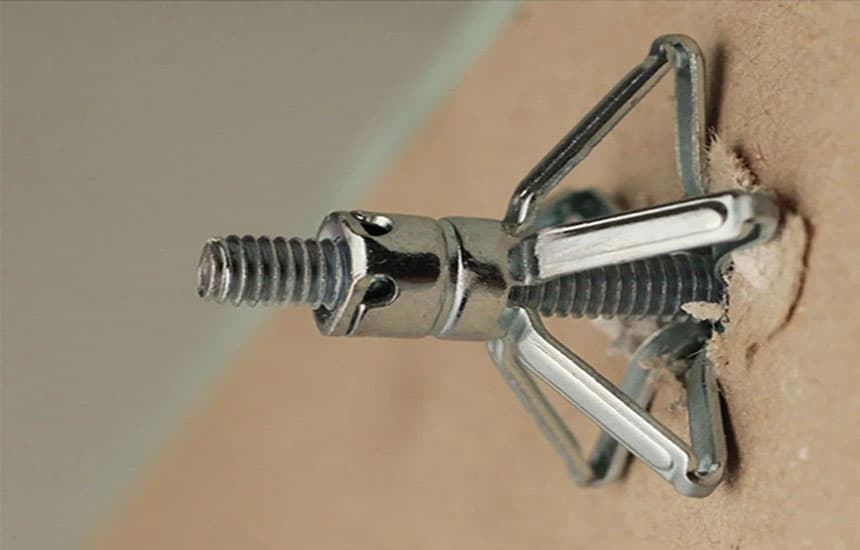
- Hollow-wall metal anchors: Open or expand behind the board to distribute the load over a wider area.
- Toggle bolts: Use a folding or spring-loaded mechanism that opens behind a hollow wall.
For heavy shelves, wall-mounted cabinets, or objects that may be pulled frequently, fixing directly into wall studs is usually preferable.
Solid brick
Solid brick can provide a strong fixing surface when the brick is in good condition. Masonry plugs and compatible screws are commonly used.
Check whether the brick is solid or perforated. The anchor type and drilling method should match the actual masonry.
Concrete
Concrete is a dense, solid material. Common options include:
- Plastic masonry plugs with compatible screws for suitable lighter applications.
- Expansion anchors for specified structural or heavier-duty applications.
- Concrete screws designed for the relevant base material and installation requirements.
Always follow the anchor manufacturer’s instructions for drill diameter, embedment depth, edge distance, and installation torque.
Hollow brick and block
Hollow masonry contains internal cavities. A standard expansion plug may not grip reliably if it expands into an empty section.
Use a fixing specifically designed for hollow masonry. Some systems use sleeves, mesh components, or mechanical expansion to improve load transfer.
Plaster over masonry
A plaster finish does not necessarily indicate the strength of the wall behind it. The fixing should normally reach the supporting masonry when the application requires it.
Avoid allowing a fixing to rely only on a thick, weak plaster layer.
2. Understand the Main Types of Wall Anchors
| Anchor type | Common application | Important consideration |
|---|---|---|
| Plastic masonry plug | Solid brick or concrete with a compatible screw | Must match the hole and base material |
| Self-drilling drywall anchor | Light items on suitable drywall | Not suitable for every load or board condition |
| Hollow-wall metal anchor | Hollow plasterboard | Requires correct setting and board thickness |
| Toggle bolt | Hollow walls and ceilings | Needs enough cavity space behind the board |
| Concrete screw | Suitable concrete and masonry applications | Requires the specified pilot-hole size and depth |
| Heavy-duty expansion anchor | Specified solid masonry or concrete | Correct edge distance and installation are essential |
No anchor type is universally strongest. Its performance depends on the substrate, installation quality, load direction, spacing, and product specification.
3. Match the Anchor to the Load
Do not choose an anchor based only on the object’s weight.
Consider these factors:
Static weight: A framed picture hanging in one position creates a different demand from a shelf loaded with books.
Pull-out force: An object projecting away from the wall can create leverage that increases the force on the upper fixings.
Movement and vibration: Frequently opened cabinets, wall-mounted equipment, and moving accessories may place repeated stress on the anchors.
Load distribution: A bracket with several fixing points may distribute a load, but uneven installation can cause one fixing to carry much more than expected.
Wall condition: Crumbling plaster, cracked masonry, moisture damage, or loose plasterboard can reduce holding strength.
Always use the manufacturer’s published load information for the exact wall material and installation conditions. Do not assume that a load rating for one substrate applies to another.
4. How to Choose Anchors for Common Household Projects
Hanging a lightweight picture
For a light picture, a suitable picture hook or light-duty drywall fixing may be sufficient. Check the wall material and use a fixing rated for the actual application.
Installing a floating shelf
Shelves create leverage, particularly when objects are placed near the front edge. Whenever possible, secure the shelf brackets into wall studs or suitable masonry.
Do not rely on a light-duty drywall anchor for a shelf that may carry heavy objects.
Mounting a mirror
Consider the mirror’s total weight, dimensions, hanging hardware, and the consequences of failure. Use suitable fixings at the specified mounting points. Large or heavy mirrors may require professional installation.
Installing a wall cabinet
Cabinets can become much heavier after being filled. Their fixing system should be selected for the combined cabinet and contents load, the wall structure, and the manufacturer’s installation requirements.
For heavy cabinets, secure the mounting rail or cabinet structure to suitable framing or masonry rather than relying on ordinary lightweight wall plugs.
5. How to Install a Wall Anchor Correctly
The exact process varies by anchor type, but these general steps help reduce installation problems.
- Inspect the area. Check for electrical cables, plumbing pipes, heating lines, and other concealed services before drilling.
- Identify the substrate. Confirm whether the surface is drywall, solid masonry, hollow brick, or another material.
- Mark the fixing position. Use a level where multiple fixing points must align.
- Choose the correct drill bit. Follow the anchor instructions for bit type and diameter.
- Drill to the required depth. Avoid making the hole unnecessarily large or damaging the surrounding material.
- Clean the hole if required. Dust can interfere with the performance of some masonry anchors.
- Install the anchor. Use the specified method and do not force a fixing that does not fit correctly.
- Tighten carefully. Over-tightening can damage drywall, strip a fixing, or compromise the installation.
- Check the result. Confirm that the fixing is secure before placing the intended load on it.
Wear eye protection when drilling. Use suitable dust protection, especially when drilling masonry or concrete. Stop if you encounter unexpected resistance or suspect a concealed service.
6. Common Wall Anchor Mistakes to Avoid
- Using a drywall anchor in solid masonry without checking compatibility.
- Using an ordinary plastic plug in hollow brick when a specialized fixing is needed.
- Ignoring the thickness and condition of the wall material.
- Choosing an anchor based only on a general weight rating.
- Drilling a hole that is too large.
- Over-tightening screws or expanding anchors.
- Installing fixings too close to an edge or to one another.
- Hanging heavy or safety-critical objects without checking the supporting structure.
7. When Should You Use Professional Installation?
Professional advice is recommended for heavy cabinets, large mirrors, overhead objects, handrails, ceiling-mounted equipment, and anything whose failure could cause injury or significant damage.
If the wall is cracked, damp, crumbling, or of unknown construction, have the substrate assessed before selecting the fixing.
Frequently Asked Questions
Can I use the same wall anchor for drywall and concrete?
No. Drywall and concrete have very different structures. Use a fixing specifically designed and rated for the wall material.
Are toggle bolts stronger than ordinary drywall anchors?
Toggle bolts can provide a more substantial fixing in suitable hollow walls because they engage the back of the board. However, performance depends on the board condition, thickness, installation, and the specific product.
Should I drill into a brick or mortar joint?
It depends on the fixing system and the condition of the masonry. Some applications specify fixing into the brick; others may allow a mortar joint. Follow the anchor instructions and avoid weak or deteriorated areas.
How many anchors do I need for a shelf?
There is no universal number. It depends on the shelf design, bracket spacing, load, wall structure, and fixing specifications. Follow the shelf manufacturer’s instructions and ensure the supporting wall can carry the load.
Can an old wall anchor be reused?
Do not assume that it can. Anchors may be damaged or weakened during removal. Inspect the hole and use a new, suitable fixing where required.
Final Advice
The safest way to choose a wall anchor is to start with the wall, not the screw. Identify the substrate, understand the load, and select a fixing system designed for those conditions.
For lightweight decorative items, simple fixings may be enough. For shelves, cabinets, mirrors, and other heavier objects, the supporting structure and installation method matter just as much as the anchor itself.