

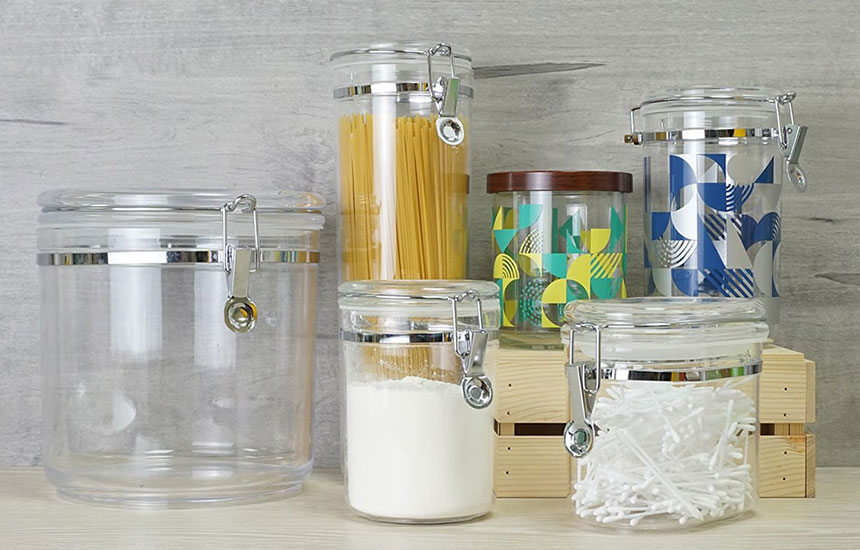
The right food storage containers help keep kitchens organized, protect food from contamination, and make leftovers easier to manage. However, not every container is suitable for every purpose.
A container used for dry pantry ingredients may not be appropriate for hot food, freezing, or microwave heating. Material, lid design, capacity, and temperature resistance all matter.
This guide explains how to choose practical food storage containers for everyday cooking, leftovers, meal preparation, and pantry organization.
1. Choose the Material According to How You Use It
Food containers are commonly made from glass, plastic, stainless steel, or silicone. Each material has different advantages and limitations.
Glass containers
Glass containers are useful for leftovers, meal preparation, and many refrigerator-storage applications.
Advantages include:
- They do not easily absorb food odors or stains.
- Their contents are easy to see.
- Many types are suitable for reheating, if specifically designed for that use.
- They can be reused for a long time when handled carefully.
Limitations:
- Glass can break if dropped.
- Some types are heavy.
- Sudden temperature changes can cause thermal stress.
Not every glass container is suitable for ovens, microwaves, freezers, or direct heat. Check the product’s temperature and use instructions.
Plastic containers
Food-grade plastic containers are often lightweight and convenient for daily storage.
Advantages include:
- Easy to carry.
- Available in many sizes and shapes.
- Often suitable for meal preparation and lunch storage.
- Less likely to break if dropped.
Limitations:
- Some plastics may stain or retain odors.
- Heat resistance varies by material.
- Scratched or damaged containers may be harder to clean effectively.
Only use plastic containers for microwave heating when they are specifically marked as suitable for that purpose. Follow the temperature and use limitations.
Stainless steel containers
Stainless steel is durable and useful for many types of food storage, lunch packing, and dry ingredient organization.
Advantages include:
- Resistant to breakage.
- Durable under normal use.
- Generally does not absorb odors as easily as some plastics.
Limitations:
- Contents cannot be seen through the container.
- Most ordinary stainless steel containers are not suitable for microwave use.
- The lid and sealing design determine whether the container is leak-resistant.
Check the material grade and food-contact suitability where these specifications are provided.
Silicone containers
Food-grade silicone containers can be flexible and convenient for certain storage and food-preparation tasks.
Advantages include:
- Flexible construction.
- Easy storage when collapsible.
- Some products are designed for a wide range of temperatures.
Limitations:
- Not all silicone products have the same temperature rating.
- Flexible containers may be less rigid when carrying liquids.
- Lid seals and cleaning requirements vary.
Always follow the stated temperature limits and use instructions.
2. Choose the Right Container Size
The most useful container size depends on the type and quantity of food you store.
| Storage purpose | Useful container characteristics |
|---|---|
| Small leftovers | Compact containers with secure lids |
| Meal preparation | Consistent portions and stackable shapes |
| Soups and sauces | Leak-resistant lids and adequate headspace |
| Dry pantry ingredients | Clear containers with easy-access openings |
| Fresh-cut vegetables | Suitable capacity and easy cleaning |
| Freezer storage | Freezer-rated material and room for expansion |
Avoid buying a large set with many sizes you will rarely use. A small collection of practical capacities often works better.
For liquids and foods that expand when frozen, leave appropriate space at the top. Do not fill containers completely.
3. Understand Airtight and Leak-Resistant Lids
The lid is just as important as the container.
Airtight lids
Airtight designs help reduce air exchange and protect dry ingredients from moisture and external contaminants. They can also help limit odor transfer in the refrigerator.
Leak-resistant lids
Leak-resistant containers are useful for soups, sauces, and packed lunches. Their performance depends on the seal, locking mechanism, container condition, and how the product is used.
A lid described as airtight is not automatically leakproof.
Lid materials and seals
Check whether the lid is easy to remove and clean. Removable silicone seals can collect residue if they are not cleaned and dried properly.
Before carrying liquid food, test the closed container over a sink rather than assuming it will remain leakproof.
4. Check Temperature Compatibility
One of the most common food-storage mistakes is using a container outside its intended temperature range.
Refrigerator use
Most food storage containers designed for household use can be used in refrigerators, but follow the product instructions.
Keep raw meat, seafood, and ready-to-eat food separated to reduce cross-contamination.
Freezer use
Choose containers specifically rated for freezer use.
Leave space for liquids and foods that expand as they freeze. Avoid placing hot containers directly into the freezer unless the product instructions explicitly allow it.
Microwave use
Only microwave containers that are specifically marked as microwave-safe.
Remove or open lids according to the manufacturer’s instructions. Metal containers should not be placed in a microwave.
Oven use
Oven-safe does not mean every glass or ceramic container is suitable for every oven temperature. Check the stated maximum temperature and avoid sudden temperature changes.
5. Consider Shape and Storage Space
Container shape affects how efficiently food and kitchen space can be organized.
Rectangular containers often use refrigerator shelves efficiently and can be convenient for meal preparation.
Round containers may be useful for soups, sauces, and foods that are easier to stir.
Stackable containers help reduce clutter in cupboards and refrigerators.
Nesting containers fit inside one another when empty, which can save storage space.
Choose shapes that fit your refrigerator shelves, cupboard dimensions, and common meal portions.
6. Look for Easy Cleaning and Maintenance
A container that is difficult to clean may become less practical over time.
Before choosing, check:
- Whether the container has narrow corners or deep grooves.
- Whether the lid seal can be removed for cleaning.
- Whether the container is dishwasher-safe.
- Whether the material can retain stains or odors.
- Whether the surface is scratched, cracked, or damaged.
Dishwasher-safe labeling may apply only to certain parts. For example, the container body may be dishwasher-safe while the lid requires hand washing.
Dry containers and lids completely before storing them to reduce trapped moisture and unpleasant odors.
7. How to Organize Food Storage Containers
A simple organization system can make everyday kitchen use easier.
- Keep frequently used containers in an accessible cupboard.
- Store lids separately or group them with their matching containers.
- Use consistent sizes for meal preparation where practical.
- Label frozen food with its contents and storage date.
- Arrange leftovers so older items are easy to identify.
- Remove containers with cracks, damaged seals, or persistent odors.
Do not rely on appearance alone to determine whether stored food is still safe to eat. Follow appropriate food-safety guidance for storage times and temperatures.
8. Common Buying Mistakes to Avoid
- Choosing containers based only on appearance.
- Assuming all plastic containers are microwave-safe.
- Assuming all glass containers are oven-safe.
- Treating airtight and leakproof as identical features.
- Buying sizes that do not fit the refrigerator or cupboards.
- Ignoring the cleaning requirements of lids and seals.
- Using damaged containers for food storage.
- Filling freezer containers to the top.
- Storing raw and ready-to-eat foods together without proper separation.
Frequently Asked Questions
Are glass food containers better than plastic ones?
Neither material is automatically better for every purpose. Glass is useful for many refrigerator and reheating applications when rated for them, while plastic is often lighter and more convenient for carrying. Choose according to the intended use and product specifications.
Can I put plastic food containers in the microwave?
Only if the container is specifically marked as microwave-safe. Follow its instructions, including any restrictions on heating time, temperature, or lid use.
Are airtight containers necessary for all food?
No. They are particularly useful for dry ingredients and foods that benefit from reduced air exposure. Other foods may require different storage methods, refrigeration, or packaging.
How do I stop food containers from retaining odors?
Wash containers promptly, clean lid seals and grooves, and dry all parts completely. Some materials may retain strong food odors more readily than others. Replace containers that remain difficult to clean or have persistent contamination concerns.
Can I freeze food in glass containers?
Only use glass containers specifically rated for freezer use. Leave expansion space and avoid sudden temperature changes that could cause breakage.
How often should I replace food storage containers?
There is no universal replacement schedule. Inspect containers regularly and replace those with cracks, chips, warped surfaces, damaged seals, or persistent odors that cannot be removed through normal cleaning.
Final Advice
The best food storage container is one that suits the food, storage temperature, cleaning routine, and available kitchen space.
Rather than choosing a large set based only on appearance, compare material, capacity, lid design, temperature ratings, and ease of cleaning. A small, well-selected collection can make everyday food storage safer and more convenient.